Sanitation That Reduces Illness Transmission
School Cleaning in City unavailable for classrooms, restrooms, and shared spaces where students and staff gather daily
Schools concentrate hundreds of students in enclosed spaces where germs spread through surface contact, shared supplies, and close proximity. Executive Facility Maintenance Solutions LLC provides cleaning for educational facilities that prioritizes sanitation over appearance alone, addressing desks, door handles, restroom fixtures, and common areas where pathogen transmission occurs most readily. The service targets high-touch surfaces that students contact repeatedly throughout the day, reducing the bacterial and viral load that contributes to illness outbreaks affecting attendance and academic continuity.
Educational cleaning differs from commercial office work because children touch more surfaces, practice less consistent hygiene, and spend extended hours in the same rooms. Disinfection focuses on desktops, chair backs, light switches, water fountains, and restroom fixtures where contamination transfers between users. Scheduling occurs after school hours to avoid disrupting instruction and to ensure cleaning chemicals fully dry before students arrive, preventing exposure to wet surfaces or chemical residues.
Arrange a facility assessment to identify high-priority areas and establish cleaning protocols aligned with your academic calendar.
How School Sanitation Works Correctly
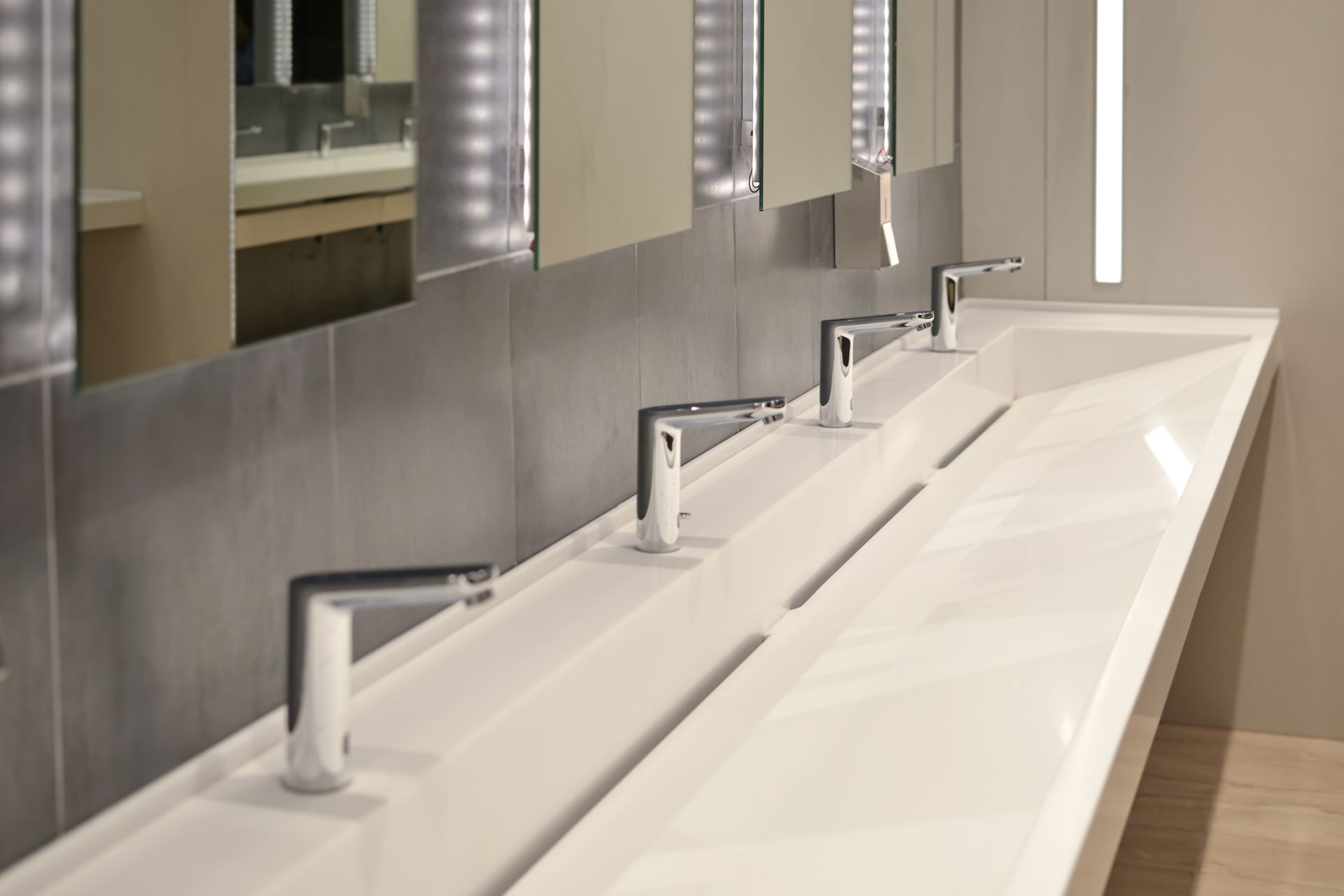
Effective school cleaning uses EPA-registered disinfectants with appropriate dwell times—the chemical must remain wet on surfaces long enough to kill pathogens rather than being wiped immediately after application. Restrooms receive daily attention including toilet and sink disinfection, floor mopping, and supply restocking, while classrooms get desk wiping, floor sweeping or vacuuming, and trash removal. Gym floors and cafeteria surfaces require different products than classroom furniture since food-contact areas and athletic surfaces have distinct contamination profiles and material sensitivities.
After consistent cleaning cycles, you notice fewer students absent during cold and flu season compared to periods without rigorous sanitation, surfaces feel clean to the touch rather than sticky or grimy, and odors from food waste or restroom use do not linger into the next school day. Hallways remain free of tracked-in dirt that becomes ground into floor finishes, extending the time between intensive floor stripping and refinishing that requires multi-day building closures.
Cleaning plans scale based on facility size and student population, with elementary schools often requiring more intensive restroom sanitation than high schools due to hygiene skill differences. The service does not include specialty athletic equipment cleaning, science lab decontamination, or hazardous material handling—these require separate protocols beyond standard educational facility maintenance.
What School Administrators Usually Ask
Educational facility managers need assurance that cleaning practices protect student health while fitting within school schedules and budget constraints that differ from commercial environments.
What cleaning products are safe for use around children?
The service uses low-toxicity disinfectants that meet EPA safety standards for educational environments, applied during after-school hours so surfaces dry completely before student contact occurs the following morning.
How does cleaning accommodate special events or schedule changes?
Service adjusts for parent-teacher conferences, evening activities, or early dismissals with advance notice, ensuring cleaning occurs when buildings are unoccupied regardless of schedule variations from normal patterns.
Can cleaning intensity increase during illness outbreaks?
Disinfection frequency escalates when norovirus, influenza, or other contagious illnesses spread through the student population, with additional attention to affected classrooms and shared spaces until outbreak subsides.
Does the service cover outdoor areas like playgrounds or courtyards?
Standard school cleaning focuses on interior spaces including classrooms, hallways, restrooms, and cafeterias, while exterior maintenance requires separate groundskeeping services beyond the scope of facility sanitation.
How do you verify that high-touch surfaces receive adequate attention?
Cleaning checklists document which areas were addressed each session, and periodic quality inspections confirm that door handles, desks, and shared equipment receive consistent disinfection rather than being missed during routine cleaning.
Educational facility cleanliness directly affects student health and learning continuity. Executive Facility Maintenance Solutions LLC tailors cleaning protocols to school-specific needs including extended breaks, testing periods, and seasonal attendance patterns that influence contamination levels throughout the academic year.